
Best Neighborhoods on St. Simons Island: A Local Real Estate Guide

What is the best neighborhood on St. Simons Island?
After 29 years in real estate and more than 875 homes personally listed, I stand by the fact that there isn’t one neighborhood that’s best for everyone. The better question is: What do you want your life on St. Simons Island to look like?
I’m John Hallman, a St. Simons Island listing specialist with Engel & Völkers Golden Isles. When I’m helping someone understand the island, I usually start with the four general areas local real estate professionals use: South, Mid South, Mid North and North.
St. Simons Island is only about 15 miles from North to South, but housing, price points, convenience and lifestyle can change considerably as you travel up the island. Understanding those differences is the best place to start.
South St. Simons Island: The Beach Lifestyle
The South End is generally the most expensive part of St. Simons Island, but there’s a reason buyers are willing to pay the premium.
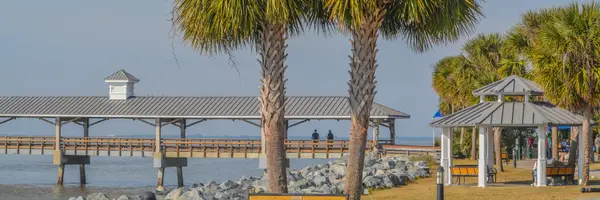
This is where you get closest to what many people picture when they say they want “a place at the beach.” Depending on the property, you may be able to walk, bike or take a golf cart to the beach, Village, Pier, restaurants and shops. The South End is also convenient to the Causeway for getting on and off the island.
One of the first questions I ask buyers is whether that lifestyle is truly important to them.
If being able to ride your bike to the beach is something you’ll regularly enjoy, paying more per square foot may be completely worthwhile. If you’re going to drive everywhere anyway, moving farther north can often get you considerably more house for your money.
East Beach
For single-family beach living on the Southern portion of the island, East Beach is one of the first places I would consider.
The attraction is straightforward: location and beach access. In my experience, East Beach attracts many second-home and vacation-property buyers specifically looking for the St. Simons beach lifestyle.
It’s also a good example of why price per square foot alone can be misleading on St. Simons Island. Buyers aren’t simply purchasing a house. They’re placing significant value on its location and the lifestyle that comes with it.
St. Simons Island Club
St. Simons Island Club offers a different version of upscale South End living.
Rather than being primarily about walking to the beach, Island Club is an established, polished single-family community that, in my experience, has more of a full-time residential character. It also offers exceptional convenience for people who regularly travel on and off St. Simons Island.
For someone who wants an upscale single-family neighborhood and excellent island convenience but doesn’t necessarily need to walk to the beach, Island Club would be high on my list of recommendations.
King’s Terrace and the Village Area
King’s Terrace provides tremendous convenience to the Village and South End amenities.
It’s also interesting because the neighborhood is evolving. Older homes are increasingly being replaced by larger, newer residences, illustrating how the housing stock within an established St. Simons neighborhood can change over time.
South End Condominiums: Another Way to Own at the Beach
A buyer doesn’t necessarily need a single-family home to enjoy the South End lifestyle.
Oceanfront and near-ocean condominium and townhome developments can provide beach access, ocean views or proximity to the water at price points that may be considerably below those of comparable single-family beach properties.
Communities such as Ocean Walk and Village Green also offer exceptional convenience to the Village and Pier at more accessible price points.
For second-home owners, condominiums offer another important advantage: the ability to lock the door and leave without many of the maintenance concerns associated with leaving a detached home vacant for long periods.
How Rental Restrictions Can Affect Condo Resale
One thing buyers and sellers sometimes misunderstand is the relationship between rental restrictions and condominium value.
It might seem logical that stricter rental restrictions would automatically make a condominium more valuable because there would be less turnover from vacation renters. In practice, that’s not always how the St. Simons market behaves.
A significant portion of South End condominium demand comes from buyers who want to enjoy the property themselves while having the option to rent it when they’re away to help offset ownership expenses.
As a result, a condominium with more restrictive rental rules can sometimes appeal to a smaller pool of prospective buyers than a comparable property offering greater rental flexibility.
That doesn’t mean one is inherently better. Some owners specifically prefer communities with longer minimum rental periods. The important point for buyers and sellers is that rental restrictions can affect marketability and resale value.
Rules vary by property and can change, so buyers should always verify current condominium-association and local rental requirements before purchasing. If this is a concern for you, set up a time to chat with me here!
Mid South: Convenience Without the Full South End Premium
Moving north into Mid South generally brings somewhat more affordability while retaining excellent access to shopping, restaurants and the Causeway.
The housing stock changes as well. You’ll find many established homes, including older ranch-style houses. Some have been extensively renovated, while others provide opportunities for buyers who want to renovate themselves.
Another thing people unfamiliar with St. Simons sometimes don’t realize is that Mid South isn’t simply a collection of large, named subdivisions. Some very desirable properties are located on individual streets, in small neighborhoods or in pockets of homes that don’t necessarily have a large neighborhood entrance and sign.
Harrison Pointe
Harrison Pointe offers attractive single-family homes in an exceptionally convenient location.
The homes in this community are becoming more established in age, lots tend to be relatively small and houses can sit fairly close together. The trade-off is excellent proximity to grocery stores, restaurants, entertainment and many of the places used in everyday island life.
Hamilton Landing
For buyers looking for luxury in Mid South, Hamilton Landing is one of the communities I would consider first.
It has an upscale residential feel comparable in some respects to St. Simons Island Club. Certain properties also benefit from marsh or water-oriented settings, and its location provides convenient access to other parts of the island.
Epworth
The Epworth area offers a different atmosphere.
Larger lots and mature pine trees can provide more space and privacy than neighborhoods where homes sit closer together. Depending on the particular property, buyers may also find marsh or river views while retaining excellent convenience.
Mid South Condominiums
Condominium buyers also have several Mid South options.
Barnes Plantation and Island Square can periodically represent some of the island’s more affordable condominium opportunities. Both originated as apartment communities before conversion to condominium ownership, which gives them a different physical character from developments originally designed as individually owned condominiums.
Skiff Landing combines Mid South convenience with the possibility of marsh views in certain locations.
As you travel farther north on St. Simons Island, condominium choices generally become more limited.
Mid North: More New Construction and More House for the Money
When someone tells me, “I don’t need to be within biking distance of the beach,” Mid North often becomes much more interesting.
Moving farther north can generally provide more house for the money, and this is also where buyers encounter newer construction.
In and around North Harrington and South Harrington roads are numerous smaller residential developments. Rather than one enormous master-planned community, buyers can find many newer neighborhoods offering different home styles and price points.
Newer construction can mean modern floor plans and less immediate renovation, although many of these developments have smaller lots and less privacy than some of St. Simons Island’s older residential areas.
The Commons
The Commons is one of Mid North’s better-known residential communities and provides the recognizable feel of an established neighborhood.
For buyers who want a traditional neighborhood setting without paying South End prices, it’s one of the areas worth considering.
Sea Palms
Sea Palms deserves special attention because of its size and variety.
It’s a large, established St. Simons community offering both single-family residences and multiple condominium options. Many homes are located directly on the golf course, while other properties offer different settings throughout the community.
Membership opportunities at The Club at Sea Palms can provide access to golf, swimming, clubhouse and other amenities depending upon the membership selected.
The size and diversity of Sea Palms are also important from a real estate perspective. A home in Sea Palms should be evaluated within the context of the Sea Palms market, not simply compared with similarly sized houses elsewhere on St. Simons.
As a listing advisor with decades of experience, I am happy to sit down with clients to understand the intricacies of this community in relation to St. Simons Island living as a whole.
North St. Simons Island: Privacy, Golf and Nature
The North End provides yet another version of St. Simons Island living.
It’s quieter, more wooded and farther removed from the restaurants, shops and activity of the South End. Wildlife and natural surroundings are part of the appeal.
The trade-off is convenience. Depending on where you live, trips to the grocery store, Village or mainland can be considerably longer.
For someone who values privacy, golf, larger homesites, marsh views or simply getting away from the busier portions of the island, that trade-off may be exactly what they’re looking for.
Three communities in particular stand out to me on the North End: Frederica, Stillwater and Hampton Plantation.
Frederica
At the highest end of the North St. Simons Island market is Frederica.
Frederica offers a level of privacy, acreage and club-oriented living that is difficult to compare directly with most other St. Simons neighborhoods. Homesites can encompass multiple acres, and the community is associated with one of Georgia’s premier private golf clubs.
For a buyer seeking serious luxury, privacy, golf and space, Frederica would be one of my first recommendations. It also illustrates how differently two buyers can define luxury.
One buyer may spend several million dollars on the South End because being near the ocean represents the ultimate St. Simons lifestyle. Another may choose acreage, privacy and golf at Frederica. Neither is inherently better. They’re buying completely different versions of island living.
Stillwater
Just north of Frederica, Stillwater provides another gated luxury option.
It’s characterized by newer homes and attractive natural surroundings, including lakes and marsh settings. Many properties benefit from water-oriented locations or views. For someone seeking newer luxury construction on the North End, Stillwater would be high on my list.
Hampton Plantation
Hampton Plantation rounds out what I consider the three major North End communities.
What makes Hampton particularly interesting is the variety of housing. You’ll find everything from smaller patio-style homes to substantial private residences overlooking the marsh, along with homes in the golf-course setting.
The housing stock is generally older than what buyers may encounter in Stillwater, which can sometimes create compelling value opportunities. For someone who wants North End living or a golf-oriented environment but isn’t looking at Frederica’s price level, Hampton Plantation can offer a tremendous amount of property for the money.
What Is the Best Neighborhood on St. Simons Island?
There isn’t one particular neighborhood that is best for every buyer, and that’s why I don’t begin a buyer consultation by handing someone a list of the ten “best” neighborhoods.
I start each consultation with a few questions:
How important is being near the beach?
If walking, biking or taking a golf cart to the beach is an important part of the life you’re imagining, we should probably concentrate on the South End and understand that you’ll pay a premium for that location.
If it isn’t important, there’s no reason to automatically pay for it.
How often will you travel on and off the island?
Someone commuting regularly may evaluate location very differently from someone who’s retired or purchasing a second home on St. Simons.
What kind of property do you want?
There are quite a few property-specific factors that will ultimately play a role in which community will best meet your needs. Age of the home, lot size, golf course access, rental restrictions, and so much more will affect the ‘best’ neighborhood for you.
What’s your budget?
Once I know the answers to those questions, the island usually gets smaller… very quickly.
The goal isn’t to find the neighborhood somebody on the internet declared “best.” It’s to find the part of St. Simons Island that best fits the way you intend to live.
Why Neighborhood Knowledge Matters When Selling a St. Simons Island Home
These differences become just as important when it’s time to sell.
St. Simons Island shouldn’t be treated as one homogeneous real estate market. In many ways, it’s a collection of smaller micro-markets.
Pricing a home in Sea Palms is different from pricing one in Frederica. Hampton Plantation is different from East Beach. A South End condominium shouldn’t automatically be evaluated like another condo several miles north simply because the square footage looks similar.
Fortunately, many of the island’s larger established neighborhoods generate enough sales that meaningful comparable properties can often be found within the community itself rather than reaching across the island for properties that may look similar on paper but compete in very different markets.
That’s why intimate knowledge of St. Simons Island neighborhoods matters, not only when deciding where to buy, but when determining how to position and price a property for sale.
Frequently Asked Questions About St. Simons Island Neighborhoods
What part of St. Simons Island is generally the most expensive?
The South End generally commands the highest prices because of its proximity to the beaches, Village, Pier, restaurants and other amenities. Individual luxury properties elsewhere on the island can certainly command very high prices as well.
Where can I get more house for my money on St. Simons Island?
Generally, buyers can get more house for their money as they move farther north. However, individual neighborhoods, property condition, views, lot characteristics and current inventory can dramatically affect value, so there isn’t one neighborhood that will always represent the “best value.”
Where should I look for newer construction on St. Simons Island?
Mid North has numerous smaller newer developments, particularly in and around the North Harrington and South Harrington areas. At the higher end, Stillwater is another option for buyers seeking newer luxury homes.
Does my neighborhood affect the value of my St. Simons Island home?
Absolutely. St. Simons Island consists of many smaller real estate micro-markets. Neighborhood, location within that neighborhood, views, proximity to the beach or golf, lot characteristics, condition and other factors can significantly affect how a property should be priced and positioned.
Working with John Hallman
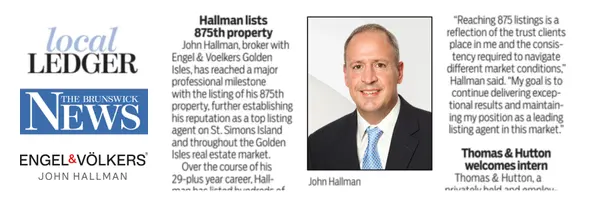
John Hallman is a St. Simons Island listing specialist with Engel & Völkers Golden Isles. A St. Simons Island resident for 17 years, John has more than 29 years of real estate experience and has personally listed more than 875 homes.
John specializes in helping St. Simons Island homeowners understand how their property fits within the island’s individual neighborhoods and micro-markets and how that should influence pricing, positioning and marketing when it’s time to sell.
To schedule an appointment with John Hallman, please contact him here!
Categories
Recent Posts



GET MORE INFORMATION

Listing Specialist & Real Estate Broker License ID: 182381